Author name: admin

News

Help Us Shape the Visual Identity of B4CVET

We are finalising the official logo for the B4CVET project. The selected logo will represent the project in all communications, materials, and events. It should reflect sustainability, vocational excellence, circular economy principles, and European cooperation. Please review the three concepts and vote for the one you believe best represents the project’s identity. Your feedback is highly appreciated. Logo Option 1 This logo emphasizes sustainability and circular transformation through strong green visual elements. The circular composition reflects the Circular Carbon Economy, while the typography conveys vocational professionalism and European cooperation. Logo Option 2 This logo is a strong typographic identity built around the acronym B4CVET. The integrated leaf elements within the “B” subtly communicate sustainability and biochar innovation, while the bold, rounded typography conveys confidence, accessibility, and vocational strength. The horizontal layout enhances readability and digital adaptability. Logo Option 3 This logo uses a circular seal format to visually represent the Circular Economy. The central plant symbol emerging from a supportive hand communicates sustainability, care, growth, and responsible innovation. The badge-style composition reinforces credibility, partnership, and institutional alignment within European vocational education frameworks.

News

AISC Participates in the B4CVET Pre–Kick-Off Online Meeting

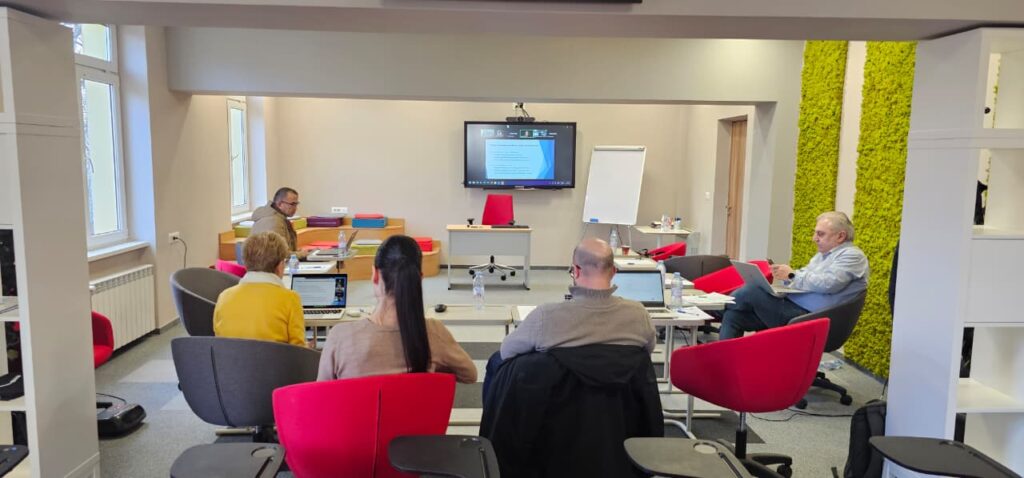
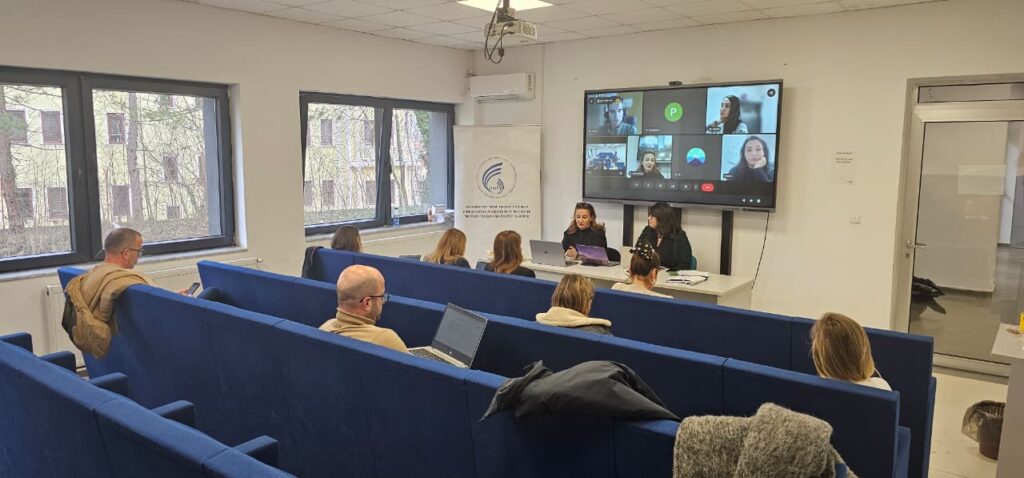
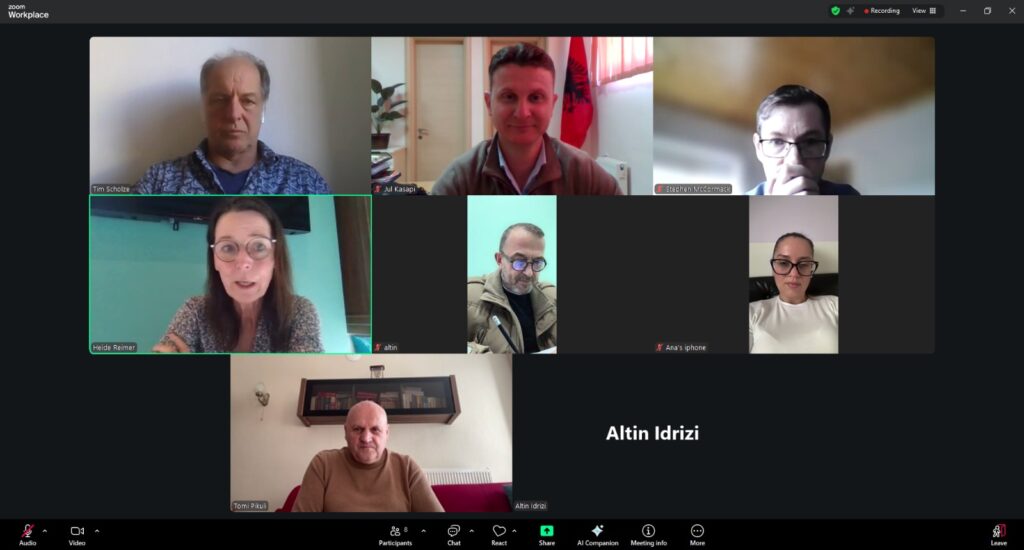
A&I Services & Consulting (AISC) proudly took part today in the first online pre–kick-off meeting of the B4CVET – Biochar for Circular Economy in Vocational Education and Training project Tpl_Application Form_B4CVET. The meeting gathered all project partners to align on strategic objectives and prepare for the first transnational partner meeting scheduled for April in Nienburg (Hanover), Germany, within the framework of the international conference “From Cultivation to Construction – Contributing to the Circular Carbon Economy.” B4CVET is an Erasmus+ Capacity Building in VET initiative designed to modernize vocational education in Albania through the integration of biochar-based Circular Carbon Economy (CCE) solutions into VET curricula and training pathways. The project addresses structural challenges in the Western Balkan VET ecosystem, including outdated curricula, limited green skills integration, weak industry collaboration, and insufficient entrepreneurial orientation. For AISC, participation in B4CVET aligns directly with its strategic mission to strengthen institutional capacity, foster innovation, and support sustainable development through EU-funded projects. As a consulting organization specialized in EU project development, curriculum modernization, and VET innovation, AISC will contribute to ensuring high-quality implementation, structured management processes, and measurable impact throughout the project lifecycle. During today’s online session, partners discussed the conceptual framework of the project, governance structure, deliverables, and coordination mechanisms. The upcoming meeting in Germany will mark the formal launch of implementation activities and will be embedded within a broader European networking event focused on circular carbon economy models, biochar applications, and sustainable construction practices. B4CVET aims to develop certified VET courses (EQF levels 3–5) focusing on biochar value chains in agriculture, horticulture, and construction, combined with entrepreneurship and innovation modules. The project will introduce interdisciplinary learning pathways, blended learning methodologies, and competence validation frameworks aligned with European standards. From a systemic perspective, B4CVET contributes to: AISC’s role will focus on strategic coordination support, quality assurance frameworks, monitoring mechanisms, and ensuring coherence between educational outputs and labour market demands. Particular emphasis will be placed on sustainability planning, dissemination strategy, and policy alignment to ensure long-term impact beyond the project duration. A key component of B4CVET is the implementation of local pilot projects that convert agricultural biomass into biochar, creating practical learning environments and new entrepreneurial opportunities. These pilots will serve as demonstrators of how VET can directly contribute to climate mitigation, carbon sequestration, and circular economy development. The pre–kick-off meeting demonstrated strong partner commitment and clear strategic direction. The next milestone will be the transnational meeting in Germany, where operational planning, timeline confirmation, and task allocation will be finalized. Through B4CVET, AISC continues to expand its portfolio in green innovation and capacity building, reinforcing its position as a reliable partner in EU-funded educational transformation initiatives. The transition toward a Circular Carbon Economy in Albanian VET has officially begun — and AISC is fully committed to driving this transformation forward. Co-funded by the Erasmus+ Programme of the European Union

News

DigiVET Kick-Off Meeting – Advancing Digital Transformation in Vocational Education

On 16–17 February 2026, the DigiVET Kick-Off Meeting officially launched a forward-looking Erasmus+ initiative focused on accelerating the digital transformation of vocational education and training (VET). The meeting gathered consortium partners to establish a clear operational roadmap, governance framework, and implementation strategy for the project’s duration. AISC (A & I Services & Consulting) was represented by CEO Altin Idrizi and CFO Elena Idrizi, reaffirming the organisation’s commitment to innovation-driven education reform and digital capacity building. DigiVET is designed to strengthen digital competencies within VET institutions while enhancing cooperation with industry. The project addresses structural gaps in digital readiness, curriculum modernisation, and work-based learning integration. Its objective is to create a scalable and transferable model that aligns vocational education systems with the realities of an increasingly technology-driven labour market. During the two-day session, partners reviewed the overall project architecture, including work packages, deliverables, milestones, and key performance indicators (KPIs). Strong emphasis was placed on structured project management, measurable outcomes, and effective monitoring systems. The consortium aligned on communication protocols, reporting timelines, and quality assurance mechanisms to ensure consistency across all participating countries. AISC plays a strategic role in DigiVET, particularly in strengthening the link between digital training and labour market demands. CEO Altin Idrizi contributed to high-level discussions on digital innovation ecosystems, stakeholder engagement strategies, and industry partnerships. He highlighted the need for VET providers to move beyond basic digital literacy and adopt applied, market-oriented digital skills that directly support employability and entrepreneurship. CFO Elena Idrizi focused on financial sustainability, compliance with Erasmus+ regulations, and cost-efficiency strategies. Robust financial governance and transparent budget management were identified as essential pillars to ensure the successful delivery of outputs and long-term impact. Key thematic discussions included the development of new digital training modules, upskilling of teachers, integration of digital platforms into teaching methodologies, and reinforcement of work-based learning models supported by technology. The partners also initiated the planning phase for needs analysis activities and capacity-building sessions. For AISC, DigiVET represents a strategic extension of its expertise in digital transformation, EU project management, and institutional development. The project strengthens AISC’s positioning as a catalyst for systemic change within the VET ecosystem. By combining digital innovation, industry collaboration, and structured capacity building, DigiVET aims to create tangible, sustainable impact. The Kick-Off Meeting marked not only the formal start of the project, but also the beginning of a coordinated effort to reshape vocational education for the digital era. Co-funded by the Erasmus+ Programme of the European Union

News

CRAFT-VET Kick-Off Meeting – AISC Strengthens Its Commitment to Innovation in VET

On 13–14 February 2026, the official Kick-Off Meeting of the CRAFT-VET project took place, marking the formal launch of an ambitious Erasmus+ Capacity Building in VET initiative focused on revitalising artisanal heritage through smart manufacturing and circular economy skills. AISC (A & I Services & Consulting) was proudly represented by its CEO, Altin Idrizi, and CFO, Elena Idrizi, who actively participated in the strategic and operational sessions of the consortium. CRAFT-VET is designed to bridge the gap between traditional craftsmanship and advanced digital technologies. The project aims to modernise vocational education by integrating 3D design tools, AI-supported production processes, blockchain-based certification, and sustainable circular economy models into training systems. It seeks not only to preserve artisanal heritage, but to reposition it within a competitive, innovation-driven European market. During the two-day meeting, consortium partners aligned on the project’s governance structure, work package architecture, financial and reporting procedures, and quality assurance framework. Particular emphasis was placed on risk management, milestone planning, and the coordination mechanisms required to ensure effective cross-border collaboration. AISC plays a key strategic role in the project, particularly in areas related to entrepreneurship development, market access, branding strategies, and sustainability planning. As discussions progressed, it became clear that CRAFT-VET is not merely a training project—it is a structured intervention aimed at creating long-term economic value for artisans, VET providers, and regional ecosystems. CEO Altin Idrizi contributed to discussions on innovation strategy, stakeholder engagement, and the development of scalable business models that can ensure the sustainability of project results beyond EU funding. His intervention highlighted the importance of aligning vocational training outputs with real market dynamics and EU competitiveness priorities. CFO Elena Idrizi focused on financial governance, compliance with Erasmus+ rules, internal control systems, and cost-effectiveness mechanisms. Sound financial planning and transparent resource allocation were identified as critical success factors for delivering measurable impact within the project timeline. Key technical sessions addressed the establishment of Smart Craft Labs, curriculum redesign, digital tool integration, and the roadmap for certification and market integration. The consortium also defined the first operational steps, including needs analysis, training module development, and stakeholder mapping. For AISC, participation in the CRAFT-VET Kick-Off Meeting reinforces its strategic positioning as a leading Albanian consultancy in EU-funded projects, innovation ecosystems, and vocational transformation. The project aligns strongly with AISC’s long-term vision: empowering institutions, strengthening industry collaboration, and building resilient, future-oriented skills frameworks. CRAFT-VET represents a concrete step toward reimagining craftsmanship in the digital era. By combining heritage, technology, entrepreneurship, and sustainability, the consortium is laying the groundwork for a modern VET model that is both culturally rooted and globally competitive. Co-funded by the Erasmus+ Programme of the European Union

News

EmpowerVET – Enhancing Key Competences and Entrepreneurship in Albania’s Vocational Education

Project Overview EmpowerVET is a strategic capacity-building project addressing the structural mismatch between vocational education outcomes and labor market needs in Albania. Persistent skills gaps, limited entrepreneurial competencies, and insufficient digital integration have contributed to youth unemployment and underemployment. EmpowerVET responds by modernizing VET systems and strengthening collaboration between education, industry, and public institutions. The project focuses on equipping learners and educators with key competences, entrepreneurial mindsets, and digital skills required to thrive in a rapidly evolving economy. Project Objectives Key Components & Activities Curriculum Alignment & Innovation EmpowerVET develops and updates learning materials to reflect labor market trends, embedding transversal skills, entrepreneurship, and applied digital competences into VET programs. Teacher Training & Professional Development Teachers benefit from structured training programs focused on: Digital Integration The project introduces digital platforms and collaborative tools that support: Stakeholder Engagement EmpowerVET actively involves businesses, SMEs, and public institutions in curriculum design, validation, and implementation, ensuring relevance and sustainability. Our Role A & I Services & Consulting participates as a project partner, contributing to: Expected Results & Impact Sustainability & Long-Term Impact EmpowerVET ensures long-term impact through: Consortium & Partners The EmpowerVET consortium combines international and local expertise in education, innovation, and project management:

News

DigiVET – Emphasizing Digital Skills in Vocational Education and Training

inable agriculture, and advanced manufacturing. Teacher Training & Capacity Building Educators receive targeted training in: Work-Based Learning & Industry Partnerships DigiVET partners with 15 companies in Albania, Spain, and Turkey to provide: Inclusion & Equal Access Special initiatives, including the “VET for Her” program, promote female participation in STEM-related VET programs. Scholarships and mentoring support learners from rural and disadvantaged backgrounds. Our Role A & I Services & Consulting participates as a project partner, contributing to: Expected Results & Impact Sustainability & Long-Term Impact DigiVET ensures sustainability through: Consortium & Partners The DigiVET consortium brings together academic, institutional, and private sector partners:

News

CRAFT-VET Revitalizing Albanian Artisanal Heritage Through Smart Manufacturing and Circular Economy Skills

Project Overview CRAFT-VET is a transformative vocational education project aimed at revitalizing Albania’s artisanal and craft sector by bridging traditional craftsmanship with digital innovation, smart manufacturing, and circular economy principles. While Albania has a rich heritage in crafts such as woodworking, filigree jewelry, stone carving, and textiles, the sector faces declining youth engagement, outdated training practices, limited digital skills, and weak access to international markets. The project addresses these challenges by modernizing VET programs and equipping artisans and learners with future-ready skills that combine heritage preservation with economic competitiveness. Project Objectives Key Components & Activities Smart Craft Labs CRAFT-VET establishes Smart Craft Labs in VET schools, enabling hands-on learning in: Digital Market Access A dedicated digital craft marketplace is developed, allowing artisans and learners to: Circular Economy & Sustainability Training focuses on zero-waste production methods and sustainable material use, embedding circular economy principles into artisanal production. Legal Protection & Certification The project promotes Geographical Indication (GI) certification, strengthening legal protection and international competitiveness of Albanian crafts. Our Role A & I Services & Consulting contributes as a project partner by: Expected Results & Impact Sustainability & Long-Term Vision CRAFT-VET ensures long-term impact through: Consortium & Partners The CRAFT-VET consortium brings together VET institutions, research centers, private enterprises, and civil society organizations from the region:

News

B4CVET – Biochar for Circular Economy in Vocational Education and Training

Project Overview B4CVET is an international vocational education project designed to modernize Albania’s agricultural VET sector by integrating biochar-based learning and circular carbon economy (CCE) principles into vocational training. The project responds to persistent challenges in the sector, including low innovation, limited sustainability practices, and weak alignment between vocational education and labor market needs. By introducing practical, competence-based learning modules, B4CVET equips learners, educators, farmers, and SMEs with applied green skills that support sustainable agriculture, climate resilience, and new business opportunities. Project Objectives Key Components & Activities Curriculum Development & Pilot Implementation B4CVET develops and pilots biochar-related learning modules in Albanian VET schools, integrating: Capacity Building & International Cooperation The project includes international study visits and knowledge exchange with leading European organizations active in circular carbon economy and sustainable agriculture. Digital & Innovative Learning Tools Digital learning resources and teaching aids support blended learning approaches and ensure accessibility for learners and educators. Business–VET Collaboration B4CVET actively engages farmers, SMEs, and industry stakeholders, enabling real-world application of biochar solutions for: Our Role A & I Services & Consulting participates as a project partner, contributing to: Expected Results & Impact Sustainability & Long-Term Impact B4CVET ensures sustainability through: Consortium & Partners The B4CVET consortium brings together European and Albanian partners with expertise in sustainable agriculture, education, and innovation:

News

DUALKO – Strengthening Higher Education–Industry Relations through Dual Education in ICT

Project Overview DUALKO is a regional capacity-building project aimed at modernizing higher education in Albania and Kosovo through the implementation of Dual Higher Education (DHE) models. The project responds directly to the persistent mismatch between academic education and labor market needs, particularly in the ICT sector. By integrating academic learning with structured, work-based training, DUALKO strengthens cooperation between higher education institutions and the private sector. The project adapts proven dual education practices from Austria, Poland, and Cyprus to the local institutional, legal, and economic contexts of Albania and Kosovo. Project Objectives Key Components & Activities Development of Dual Higher Education Models DUALKO designs four adaptable DHE models, providing flexibility for different institutional and sectoral contexts. These models integrate academic instruction with supervised, work-based learning in partner companies. Capacity Building for Academic and Industry Staff The project delivers targeted training for: This ensures quality learning experiences and consistent standards across institutions. Digital Collaboration Platform A dedicated CMS and eLearning platform supports communication, coordination, and learning between universities, students, and industry partners. Pilot Implementation & Evaluation Pilot DHE programs are implemented in selected HEIs, followed by structured monitoring and evaluation to assess effectiveness, scalability, and impact. Our Role A & I Services & Consulting contributes as a project partner by: Our role focuses on ensuring practical applicability, long-term adoption, and alignment with regional development priorities. Expected Results & Impact Sustainability & Long-Term Vision DUALKO ensures sustainability through: Consortium & Partners The DUALKO consortium consists of higher education institutions, public authorities, and private sector partners from Albania, Kosovo, and the EU, working collaboratively to modernize higher education systems.

News

AGILE – Advancing Green and Digital Transitions through Innovative Learning Ecosystems

Project Overview AGILE is an international capacity-building project designed to support the twin green and digital transition in Sub-Saharan Africa and the Western Balkans, with a specific focus on Kenya, Albania, and Kosovo. The project responds to the growing demand for a modern workforce equipped with future-oriented competencies that contribute to sustainable economic growth and social impact. At its core, AGILE delivers an innovative, competency-oriented learning ecosystem that enables higher education institutions to modernize curricula, teaching methods, and digital learning infrastructures. The project places strong emphasis on aligning education with labor market needs while embedding sustainability, digitalization, and entrepreneurial thinking into academic programs. Project Objectives Key Components & Activities Competency-Oriented Curriculum Model AGILE introduces a curriculum model built around the Talent Triangle, integrating: This model is used to modernize and enrich existing study programs across seven higher education institutions in participating countries. eLearning & Digital Ecosystem The project develops a comprehensive digital learning environment, including: All resources are made publicly available, ensuring long-term accessibility and scalability. Our Role A & I Services & Consulting participates as a project partner, contributing to: Our involvement ensures that project outcomes remain practical, transferable, and aligned with both local contexts and European standards. Expected Results & Impact Consortium & Partners The AGILE consortium brings together leading academic institutions and organizations from Europe and Africa, including:

Empowering growth through expert consulting in EU grants, curriculum development, accounting, coaching, and the hospitality & tourism sectors.

Subscribe to our newsletter

© A & I SERVICES & CONSULTING Developed by PLEXUS

Copyright © 2025 All rights reserved.